
Q: Can you tell us a bit about your background and current artwork/practice?
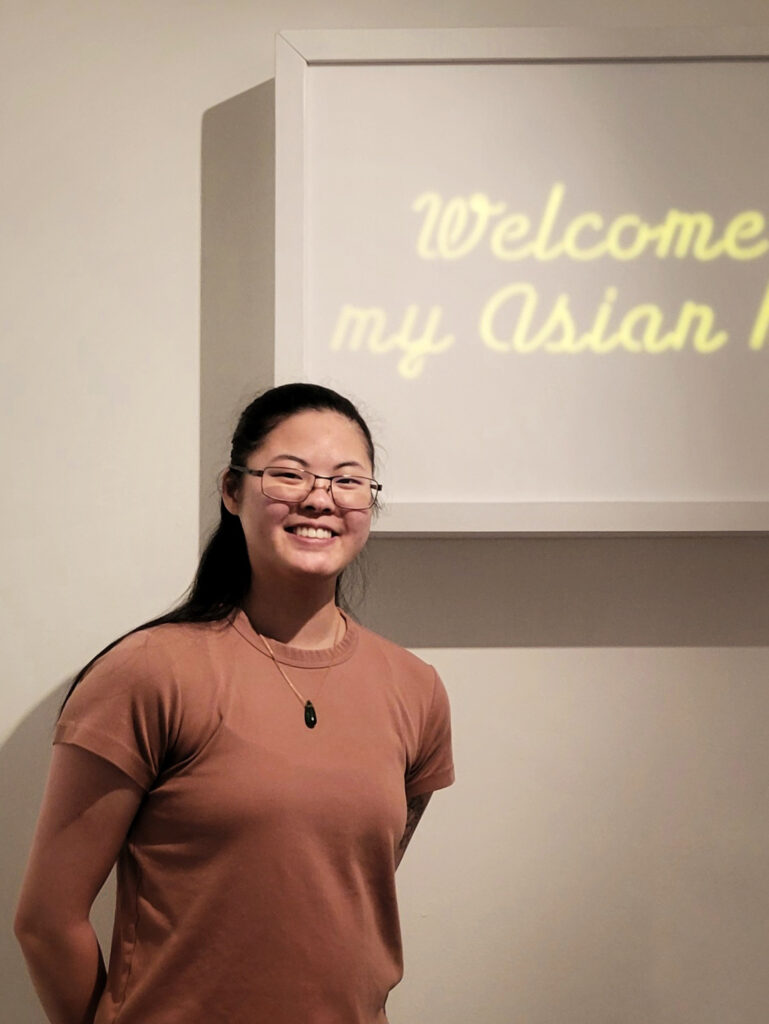
A: I am an installation artist from Bangkok, Thailand. My current work is largely informed by my immigration experience as a Thai person living in the US and expressed through electronic installations, including audio, visual, and mechanical.
Q: What has been your biggest breakthrough moment so far?
A: Allowing my objects to become dynamic through electronics and not limiting them to static objects in both 2D and 3D. I find that I can communicate more and deeper meaning with the addition of technology, while still working with authentic objects rather than imitations and representations of them. A crucial part of my work is the balance between what is real and what is manufactured. Real doesn't mean organic or natural by any means, just not mocked up or modeled after something else. If I use technology to fabricate everything, the piece loses its authenticity and relationship with my experiences in which these real objects exist. Technology only allows me to facilitate and manipulate those experiences based on my perception.
Q: Where do you see your work evolving in the next five years?
A: In all honesty, the piece I submitted to the Members Show this year has been the only installation I've made since I finished my MFA at RIT in 2024, so there is very little known direction for its evolution. Conceptually, I will continue to explore my identity and relationship with both my past and present environments. I can see my work moving away from concepts of nostalgia and more towards critical inspection of cultural differences and diaspora.
Q: What does success look like to you right now?
A: During the gallery talk (at RoCo) in December, an audience member found my explanation of the piece so moving that they started crying. While I don't hope for every piece to have that amount of emotional impact, the success of an artwork for me includes that learning and reflecting moment, when my experience as an immigrant and minority through race and gender identity can be translated to a universally shared story, struggle, or achievement.
Q: What can Rochester do better to support young and emerging artists?
A: More open studio events! Unless they are actually diligent enough to intentionally search around, young and emerging artists such as myself usually struggle to find like-minded and welcoming artist communities. Rochester's First Friday program and all of its participating businesses (RoCo, The Yards, Flower City Arts Center, The Refinery, Frank's Chop Shop, etc.) are already making this easier by consolidating events on First Fridays to make these events more accessible to the public. Open studios are especially great for emerging artists as they bring more established artists to a more mentally accessible place where people can actually see how they work. Young artists, especially undergraduate art students, are often scared of making bad work. Showing them an established artist's studio with all their junk and bad work (because everyone makes them) not only encourages them to make more work but also allows them to make mistakes without consequences.
Q: How long have you been a member? and Why did you join RoCo?
A: This is my second year as a member. I joined RoCo (and The Yards) because they are both run "by locals, for locals" with programs and events that are open to the public to encourage more participation in the local arts community.
Q: Now, something else totally; what are you currently streaming/watching/ bingeing?
A: My partner and I just binged the second half of Bridgerton season 4 the night that it came out. We're here for men who yearn (and take responsibility).